The A-Level Design & Technology Non-Examined Assessment is a two-year individual project spanning the full design cycle — from client brief through research, design development, manufacture, and evaluation. This project began in September 2025 and will complete in Spring 2027, with the final document projected to reach approximately 40,000 words across 60+ slides.
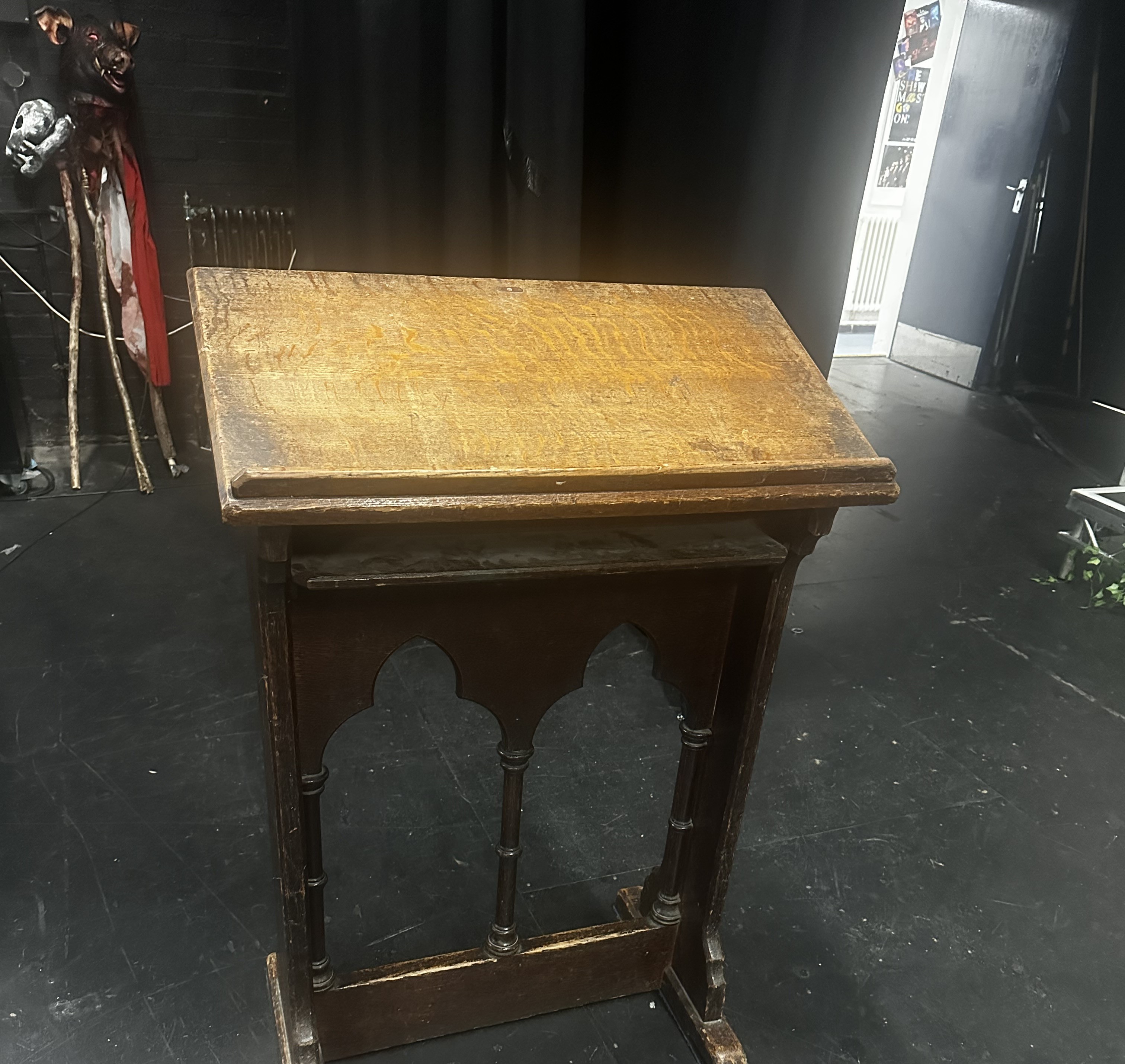
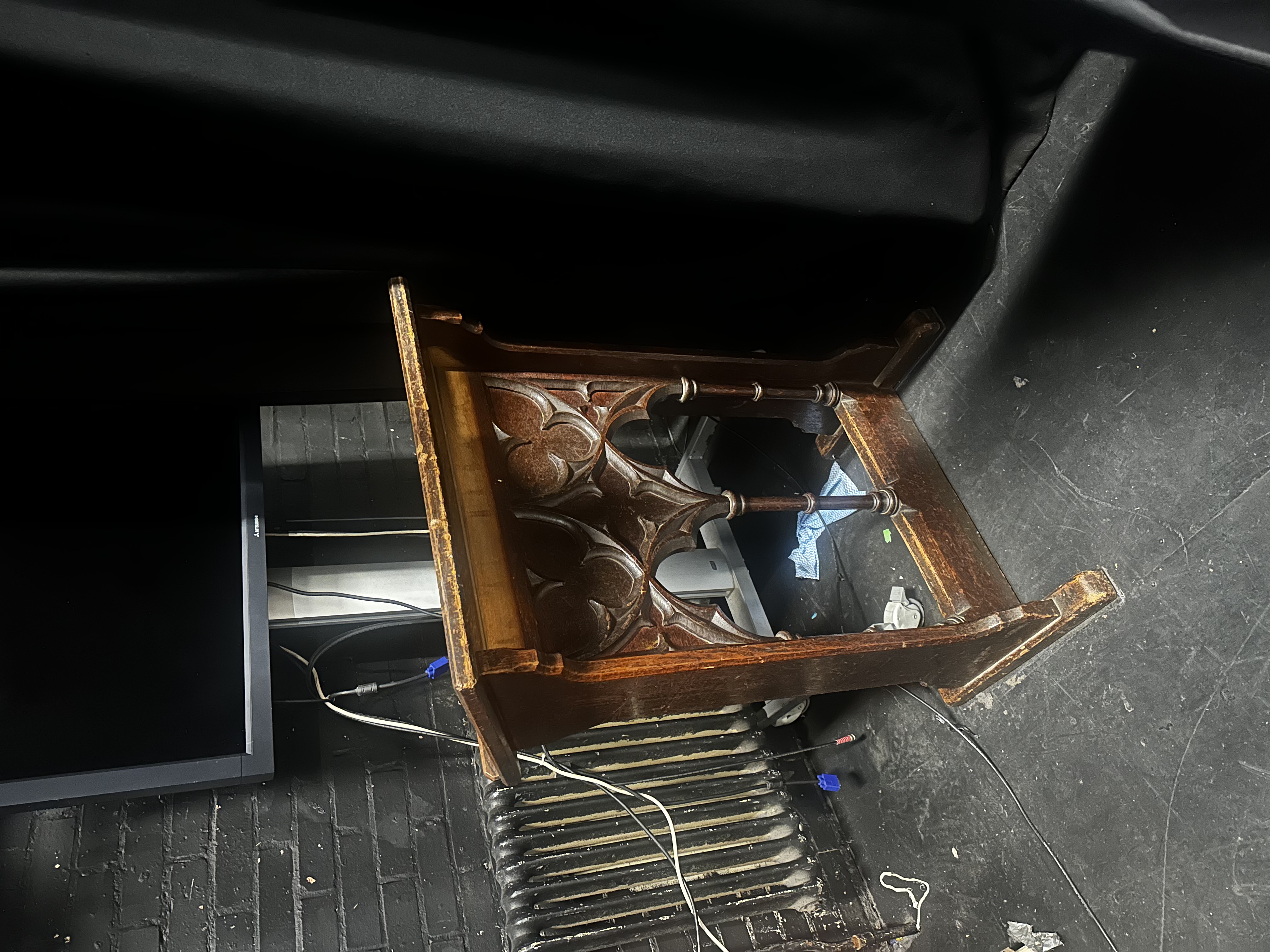
The brief is to design and manufacture a height-adjustable wooden lectern for King Edward VI Grammar School — replacing the school's ageing existing lectern, which has been in continuous use for decades. The new lectern must accommodate the full range of users who present at school assemblies, from Year 7 students to tall adults, and must include an accessible wheelchair-height position. It will be used by the Headteacher and Senior Leadership Team as a permanent fixture of the school's assembly hall.
The primary client is Natalie Wilson, Headteacher of King Edward VI Grammar School. As a presenter at whole-school assemblies every Tuesday and Friday, as well as termly and annual events, she is one of the most frequent users of the existing lectern — making her an ideal client for a project of this nature. The Senior Leadership Team and student speakers have also been consulted as secondary users throughout the research phase.
The project opened with a task analysis mapping the problem space across the contexts of school life — identifying the ageing assembly hall lectern as the strongest opportunity for meaningful design intervention. Research covered the existing lectern's history, condition, and storage environment; three existing commercial lectern designs analysed for pros and cons; and four height-adjustment mechanisms evaluated for feasibility in a school workshop context.
Anthropometric research was conducted using Henry Dreyfuss Associates' The Measure of Man and Woman to establish the upper and lower bounds of the required height range — from the elbow height of an average Year 7 student (~890mm) to the 99th percentile adult male (~1,220mm). Wheelchair accessibility was researched both from published standards and through primary research: borrowing the school's medical room wheelchair and measuring two participants of significantly different heights to determine a practical accessible position of 800–900mm.
Additional specific research covered reading surface angle (20–25° optimal for fixed-height surfaces), reading light specification (500 lux, 4000–5000K neutral white, 30° angle to avoid glare), and microphone integration — including a consultation with the KEGS Technical Team, who confirmed the school's sound system is wireless, enabling a fully cable-free lectern design.
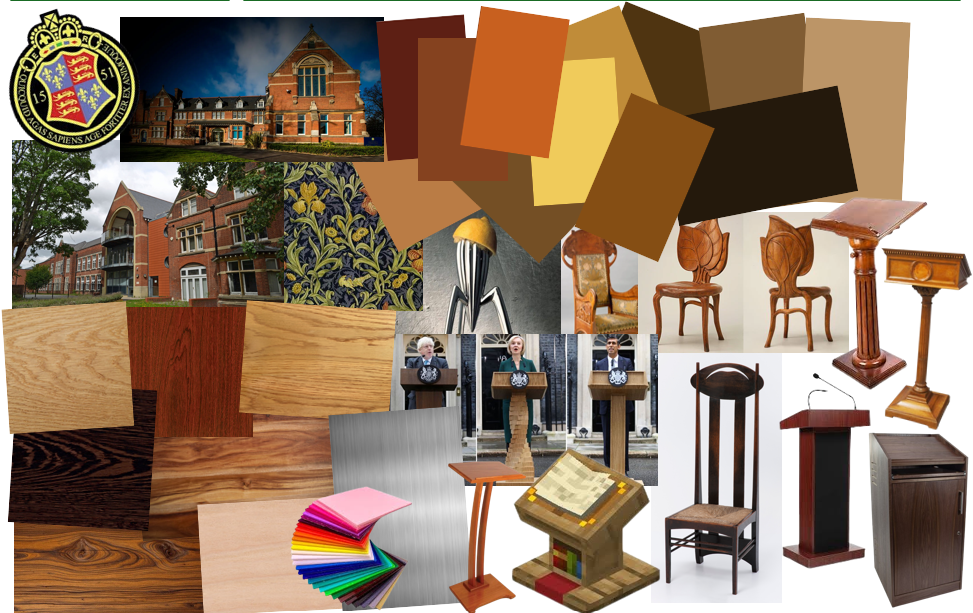
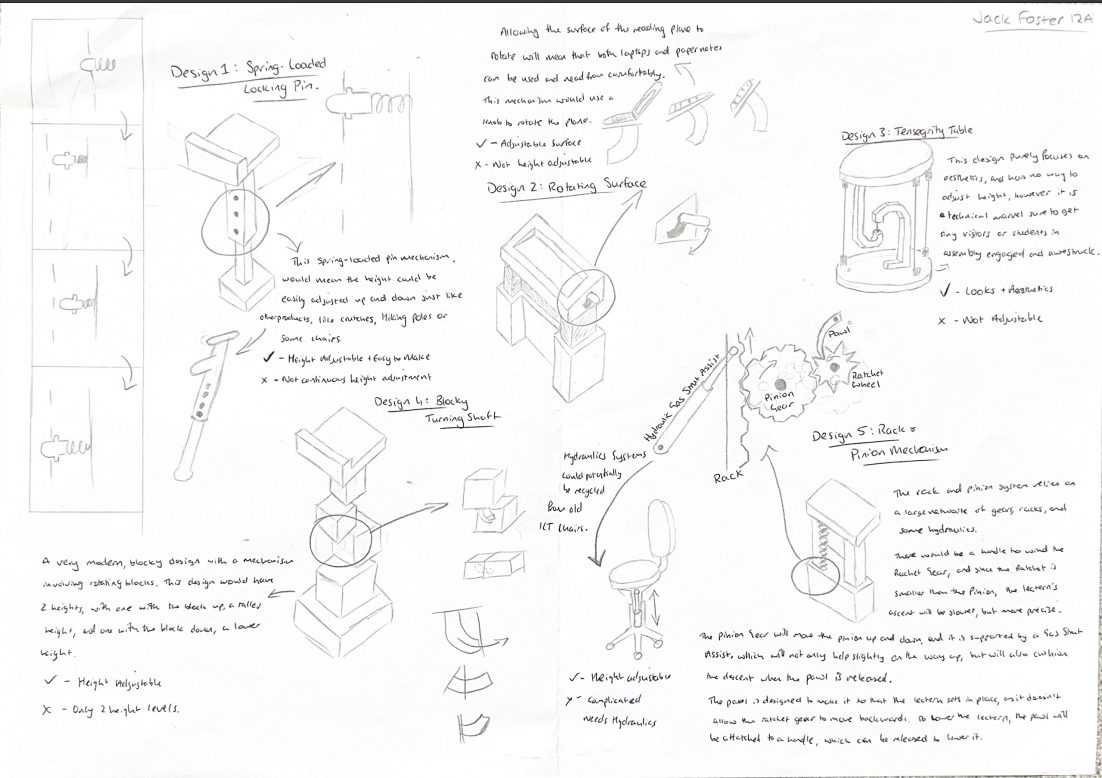
A formal interview was conducted with Headteacher Natalie Wilson and the Senior Leadership Team, presenting an A3 sheet of initial design concepts and gathering structured feedback on style, mechanism, features, and budget. Key outcomes from the interview shaped the entire design direction:
The client strongly preferred a traditional aesthetic — "a traditional looking, but modern functioning lectern" — ruling out the modern metal-frame designs in favour of carved wood. She favoured the push-pin mechanism for its simplicity and range of adjustment, requested a tilted reading surface so notes stay in eyeline, and expressed a clear preference for integrated notes storage and a reading light. The school crest was identified as a desirable engraved feature. Budget was confirmed at £1,500–£2,000, with potential sponsorship from the Foundation Trustees.
With the specification confirmed, design development is currently underway. The height-adjustment mechanism has been modelled in Autodesk Inventor — a dual telescopic column system with a push-pin on each side, allowing the inner column to be raised or lowered and locked at the desired height. The mechanism was designed to the established height range, with pin positions calculated to give a suitable number of height increments across the full adjustment range.
Finite Element Analysis was carried out in Autodesk Inventor on the push-pin component, applying a 500N maximum load to validate the pin under realistic use conditions. The analysis produced two key outputs: a Von Mises stress result and a displacement result.
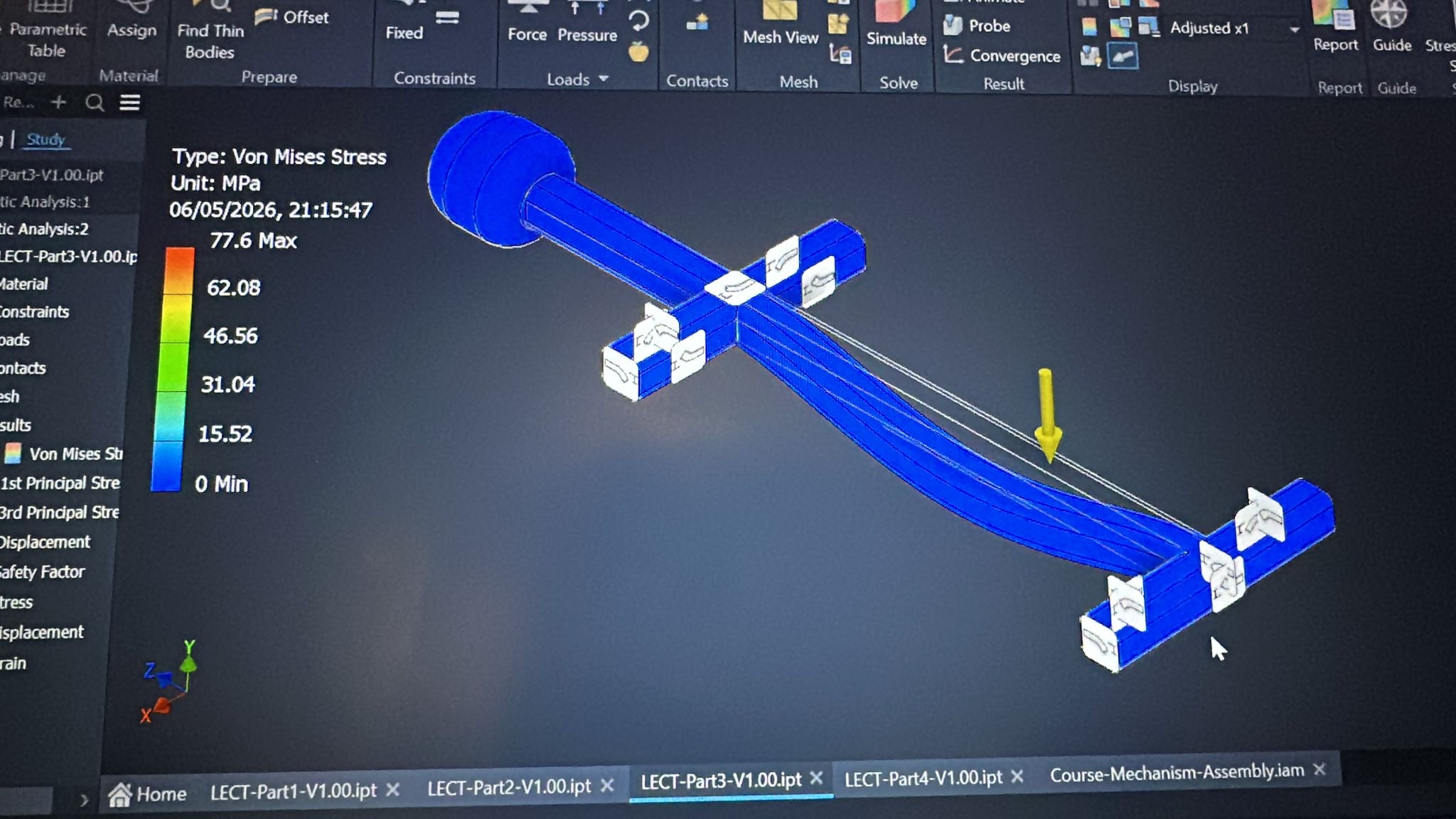
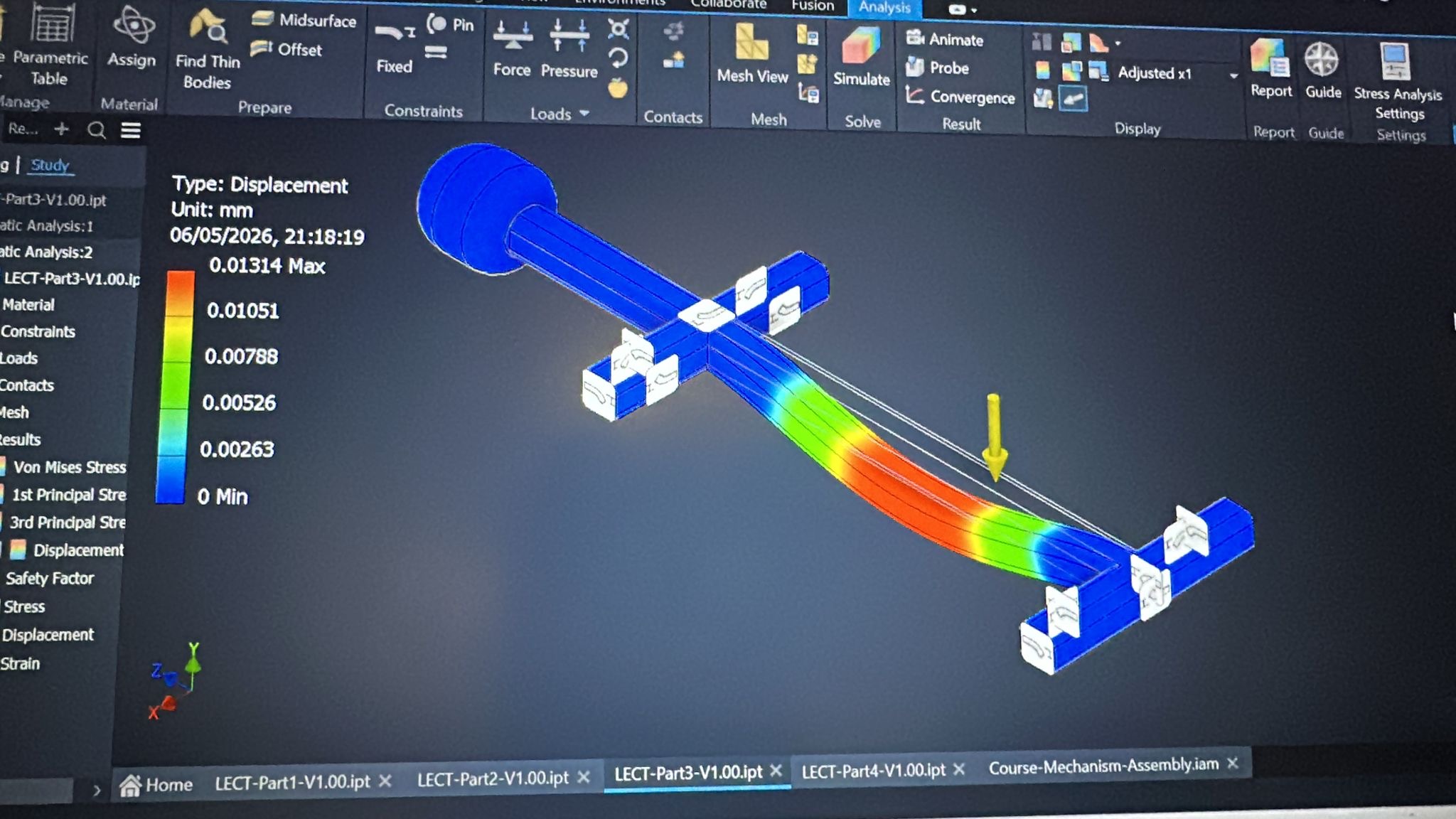
The near-zero displacement result confirms the pin geometry is structurally sound under the expected loads — the 0.013mm maximum deflection is negligible in the context of a lectern mechanism. Stress concentration at the pin head is expected and will inform material selection and any geometry refinements in the next phase.
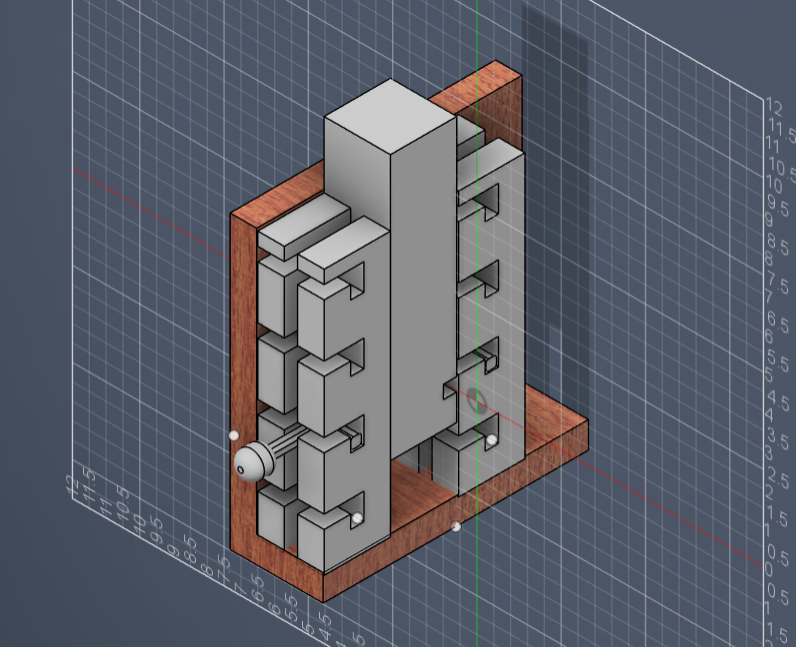
Complete 3D modelling of the full lectern assembly in Fusion 360 — body, columns, reading surface, integrated features, and school crest detail.
Physical construction of the lectern in the school workshop, working to the finalised CAD model and manufacturing drawings.
Testing against the full specification with client sign-off from Miss Wilson and the Senior Leadership Team. Final NEA folder submitted.