The GCSE Design & Technology Non-Examined Assessment is a year-long individual project — from initial brief through research, design, manufacture, and evaluation — completed entirely without assistance and submitted for external marking. This project was completed between September 2024 and April 2025, culminating in a final score of 98 out of 100 and a Grade 9.
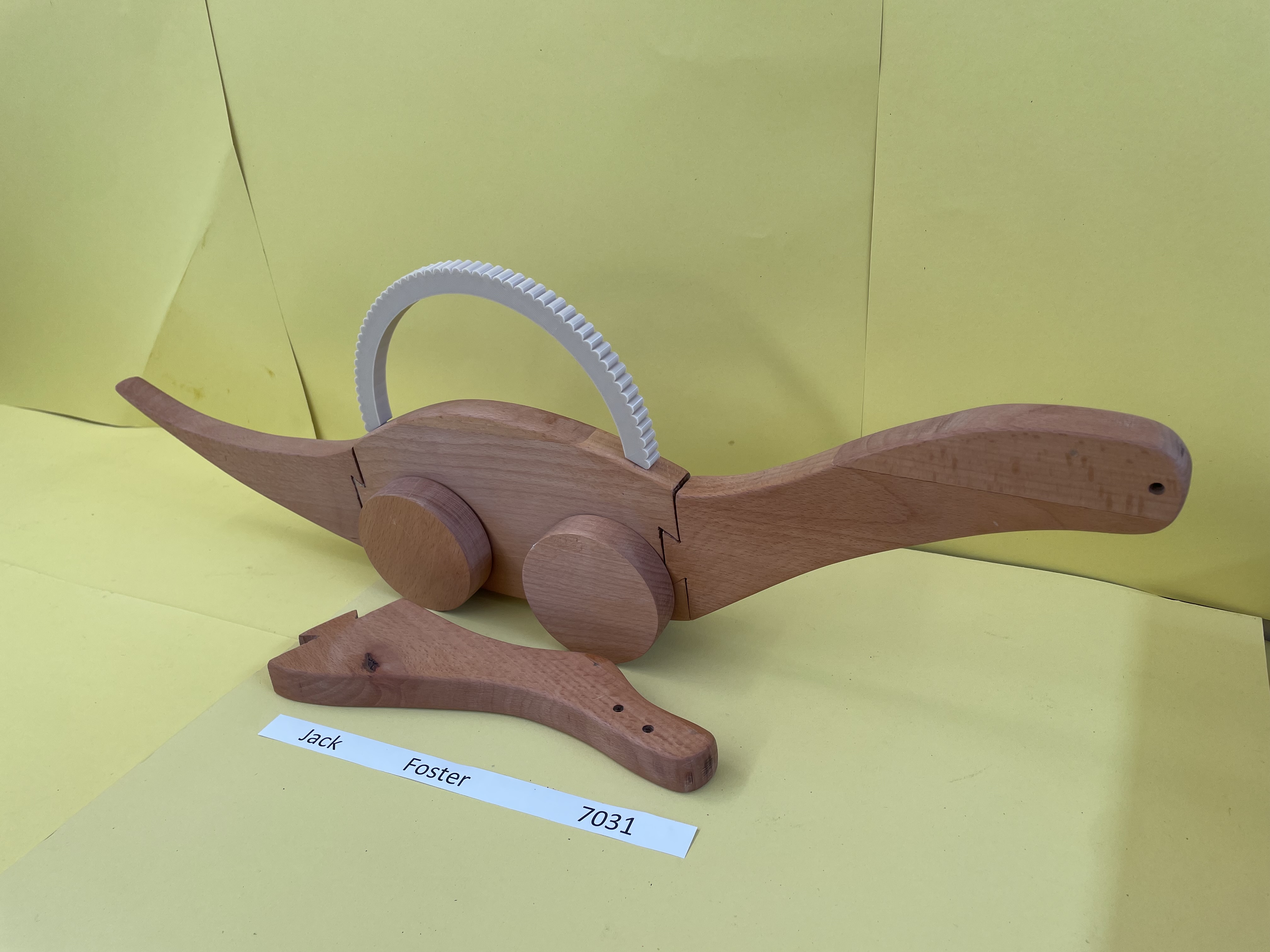
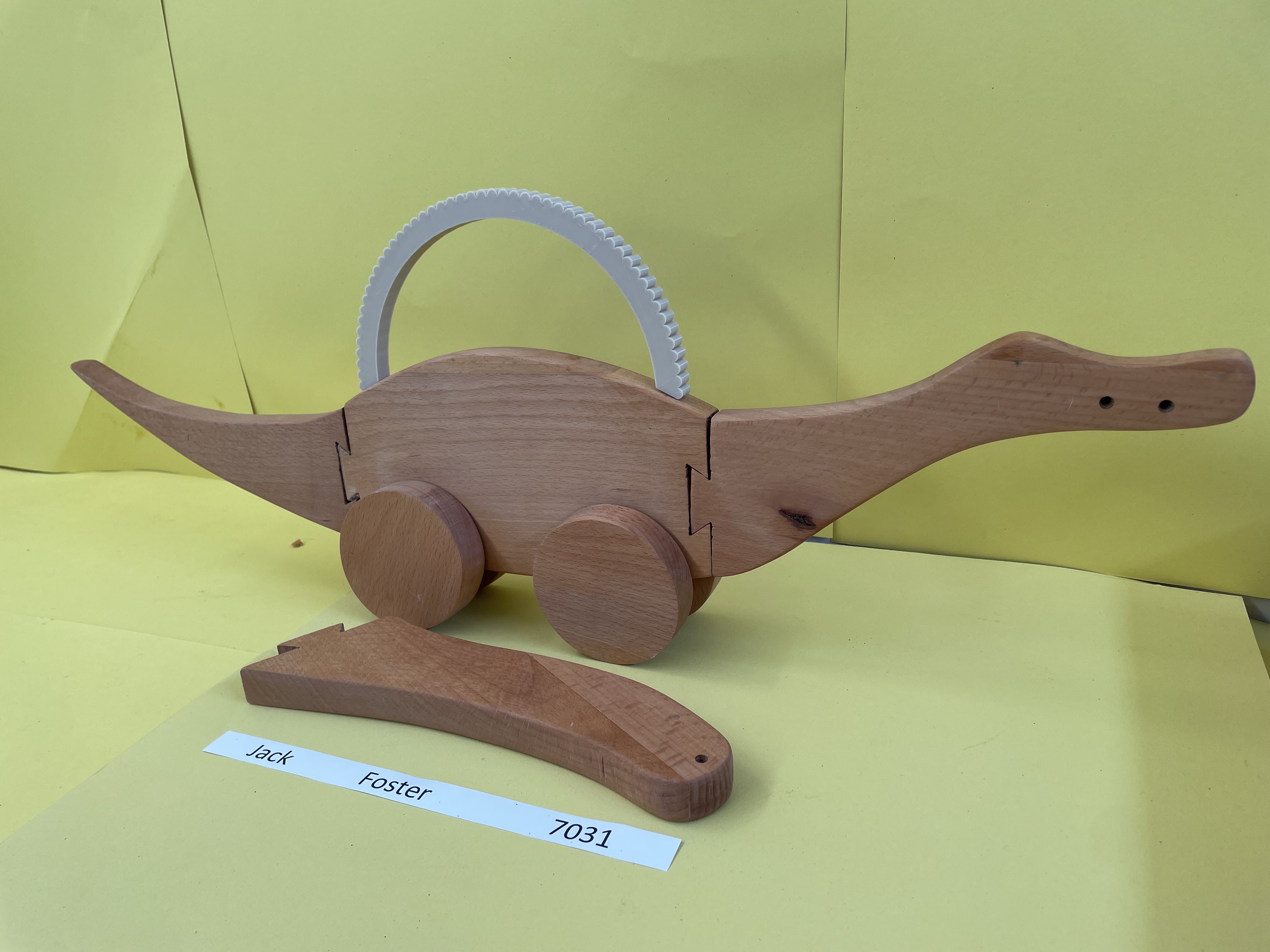
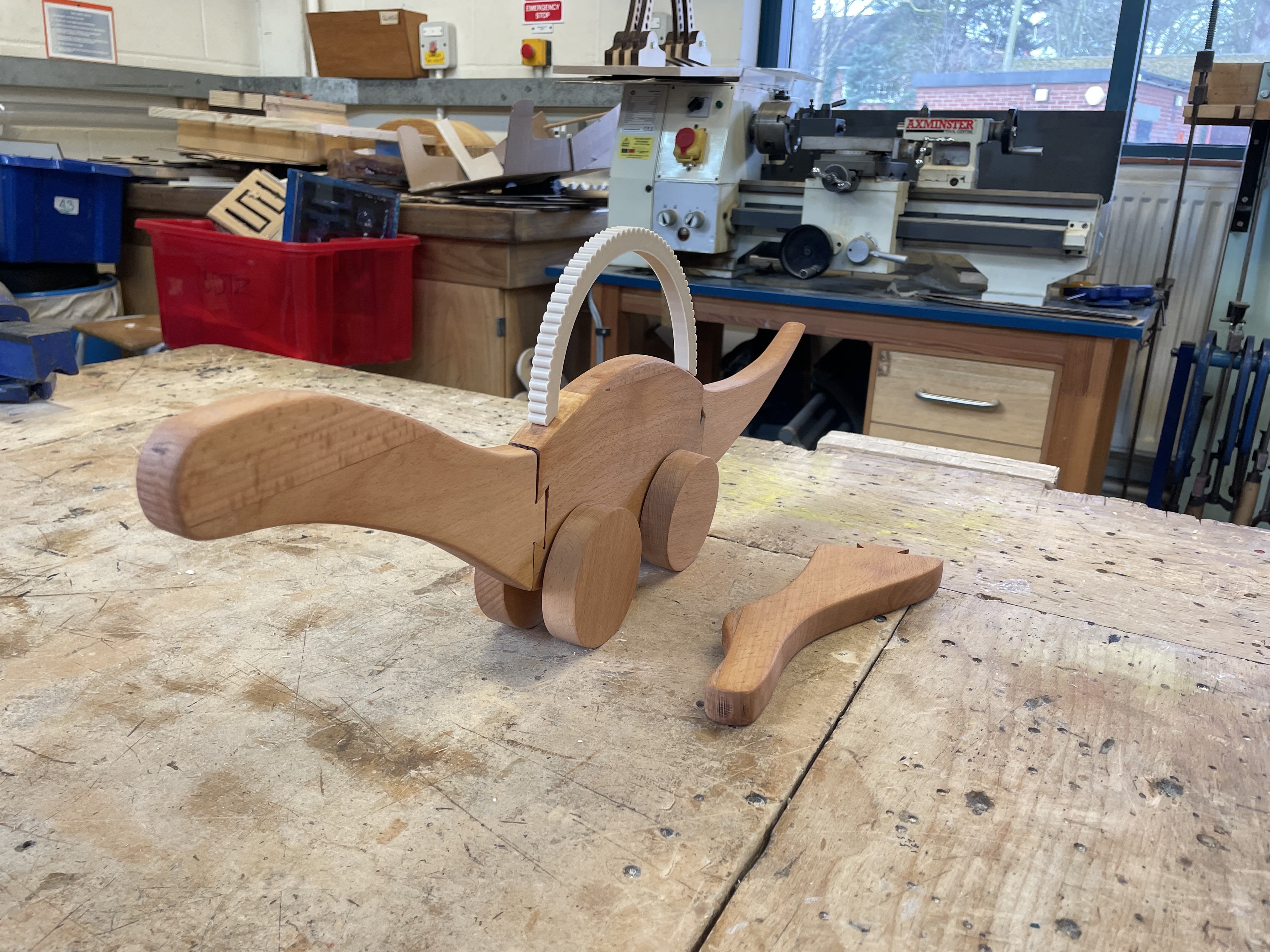
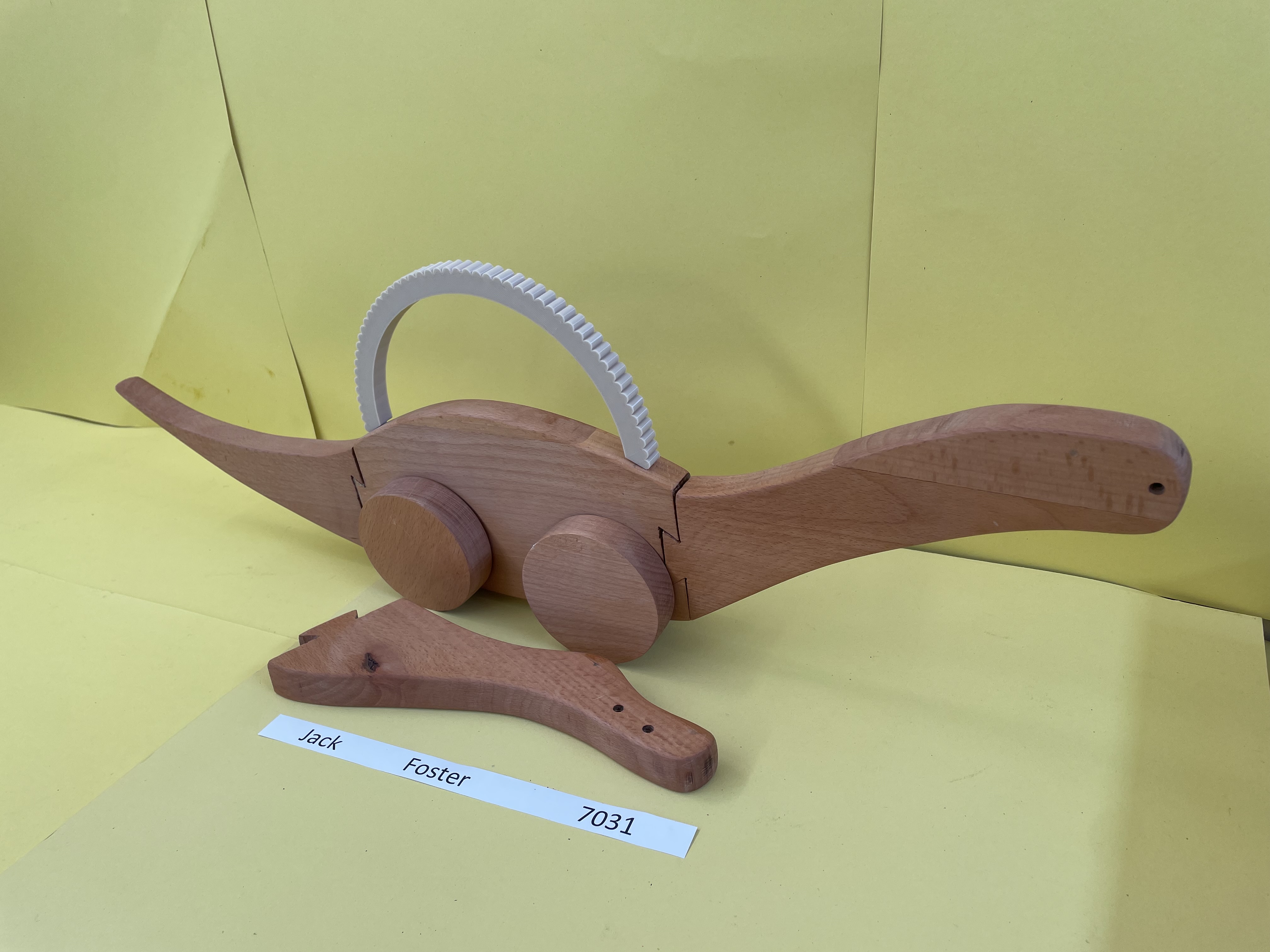
The brief was to design and manufacture a pull-along toy for young children. The outcome was a modular dinosaur built primarily from solid beech, with a 3D printed handle, and an interchangeable head and tail system — allowing children to reconfigure the toy into different dinosaur species or entirely custom creatures.
The project opened with establishing a clear design brief through client interviews and user research. Target users were young children aged 2–6, which shaped every subsequent design decision — safety, material choice, tactile quality, and the absence of small detachable parts that could pose a choking hazard.
Research covered existing pull-along toys on the market, child development considerations, and material properties. Beech was selected for its hardness, smooth grain, and long history of use in children's toys — durable enough for rough play, and free of splinter risk when properly finished. The modular concept emerged from research into how children engage with configurable and open-ended toys.
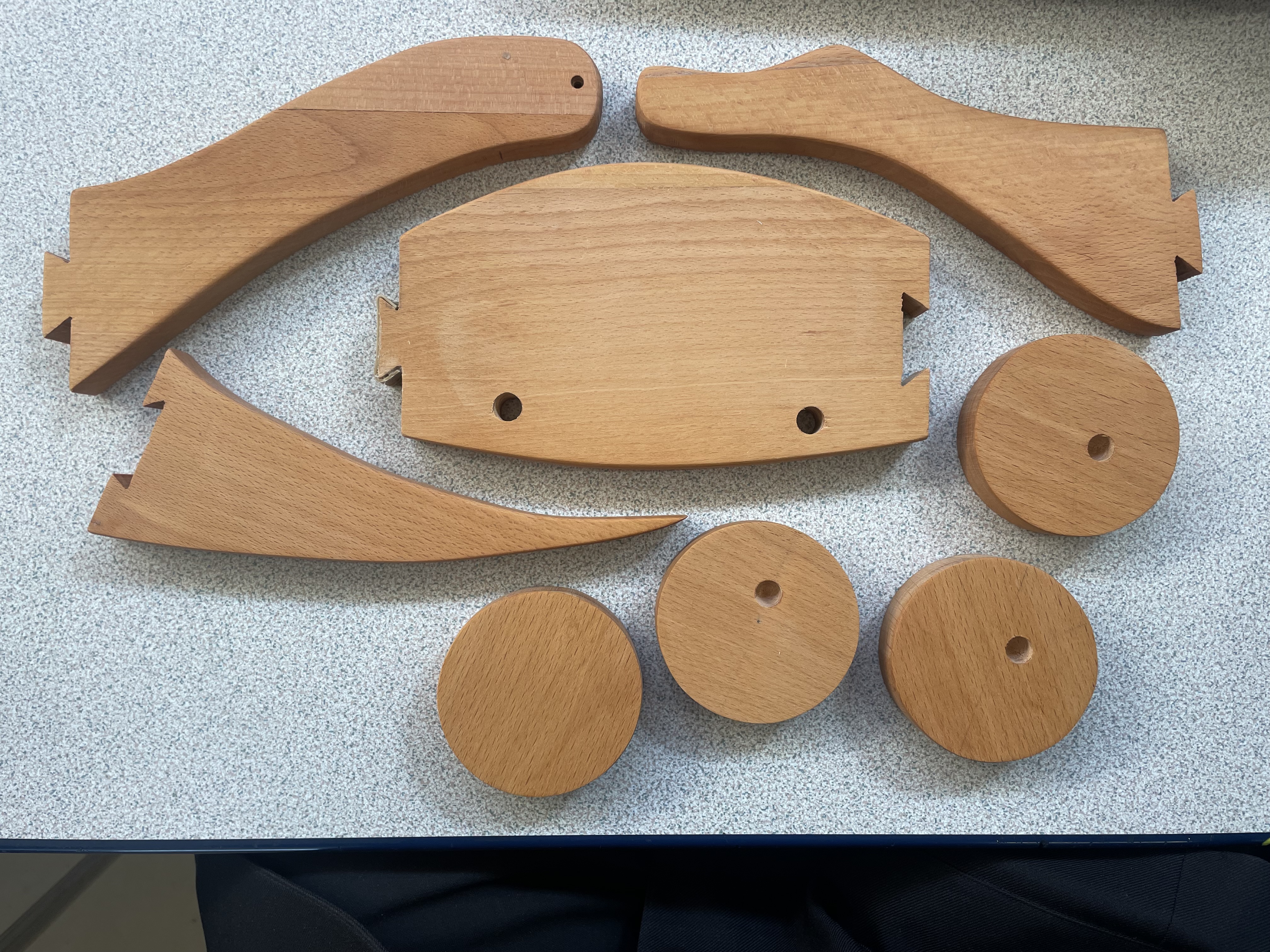
The design process moved from initial sketches through to a cardboard prototype, then detailed technical drawings and CAD modelling. The interchangeable joint system — a keyed slot cut into the body allowing heads and tails to clip in and out — was the most technically considered part of the design, requiring precise tolerances to work reliably without tools.
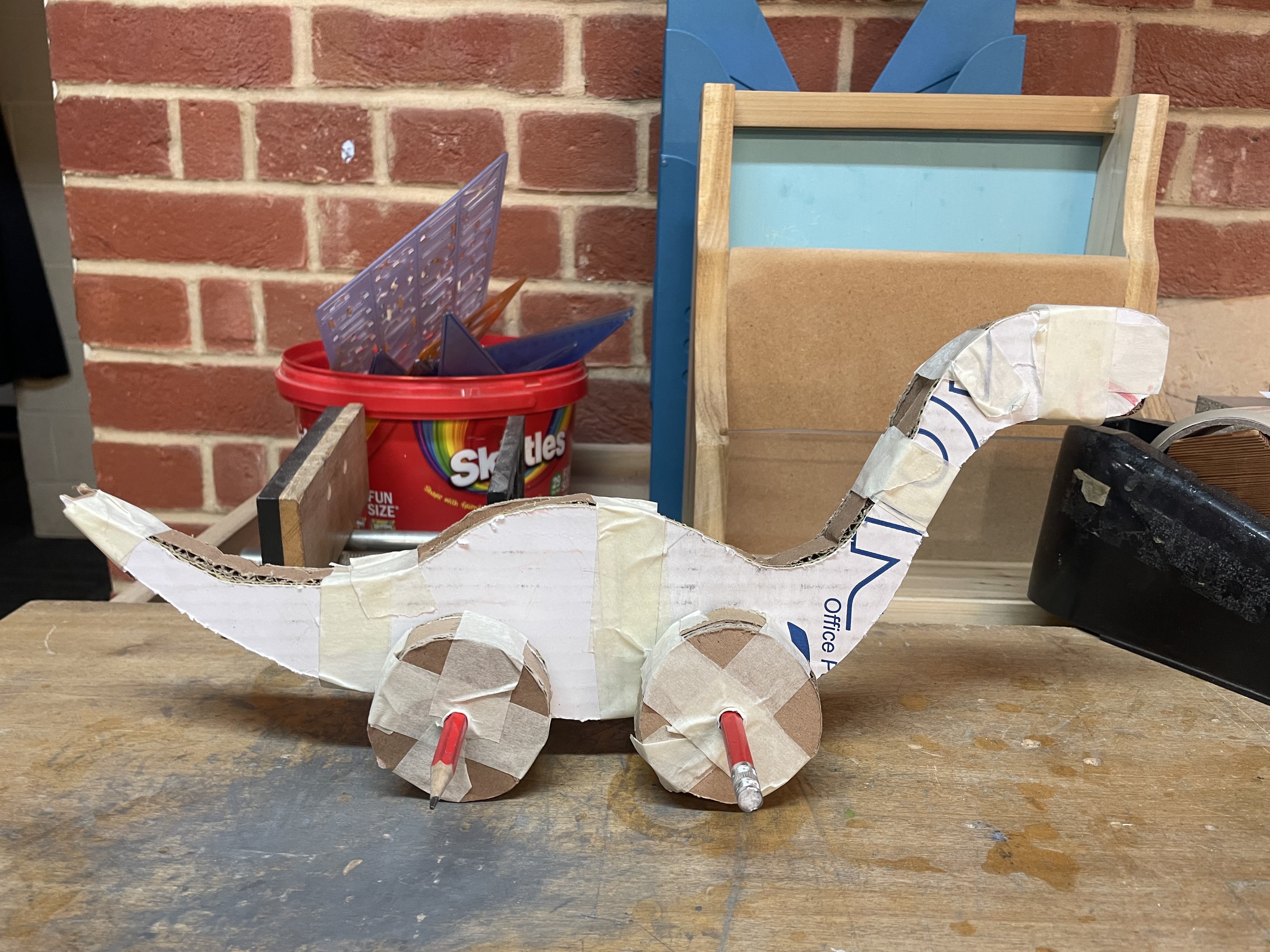
A full-scale cardboard mockup was built early in the design phase to validate proportions and test the pull-along form before committing to cutting the beech. Pencils served as stand-in axles — a quick, low-cost way to confirm wheel placement and rolling behaviour. This iterative approach meant any proportion or clearance issues were caught in card rather than in an irreplaceable piece of reclaimed timber.
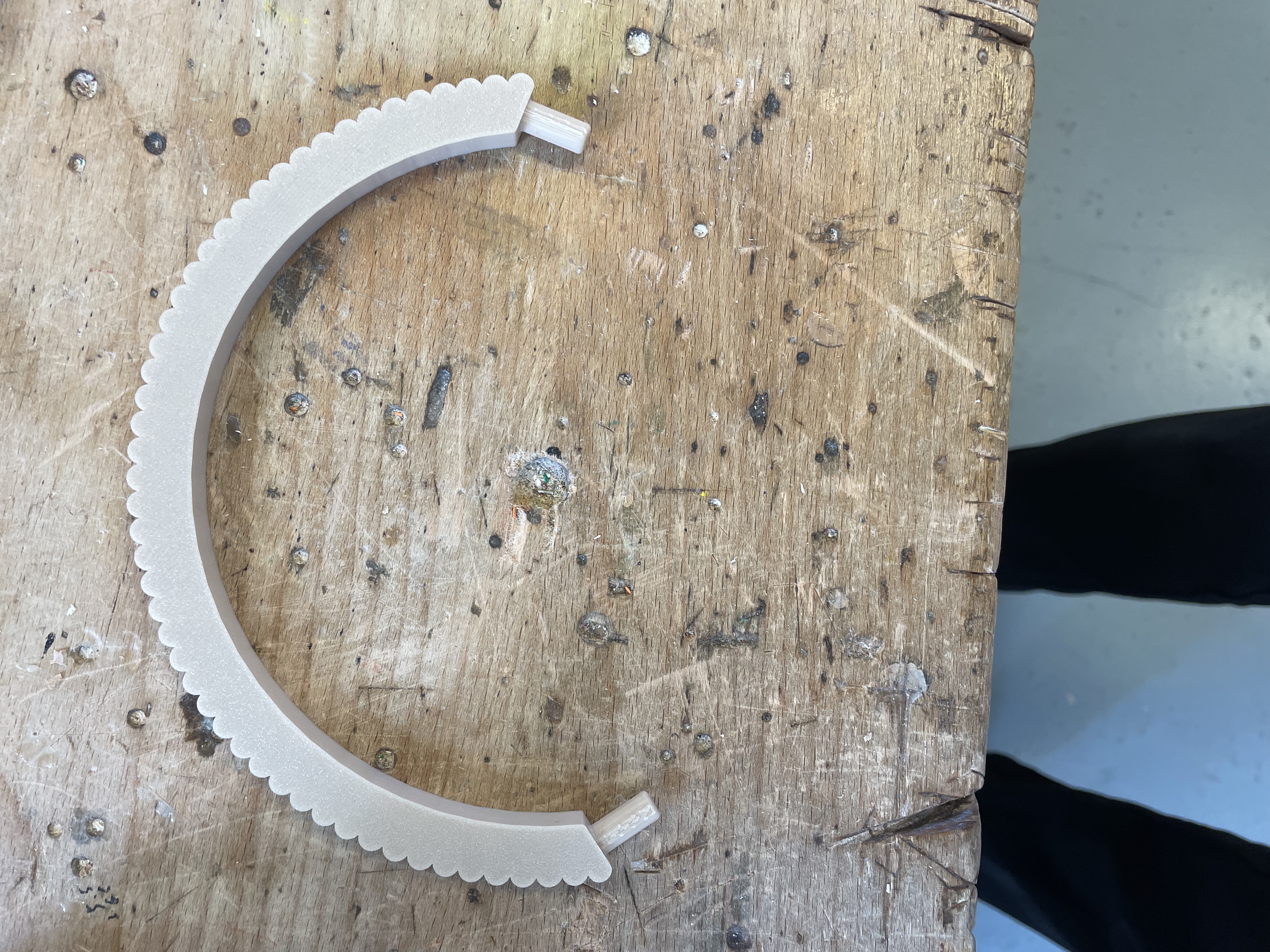
The handle was designed in CAD and 3D printed rather than cut from wood. The scalloped ridges along the outer edge were a deliberate dual-purpose decision: they give the handle a Spinosaurus spine aesthetic to complement the second head configuration, while also providing a tactile grip texture appropriate for small hands. Form and function resolved in a single design feature.
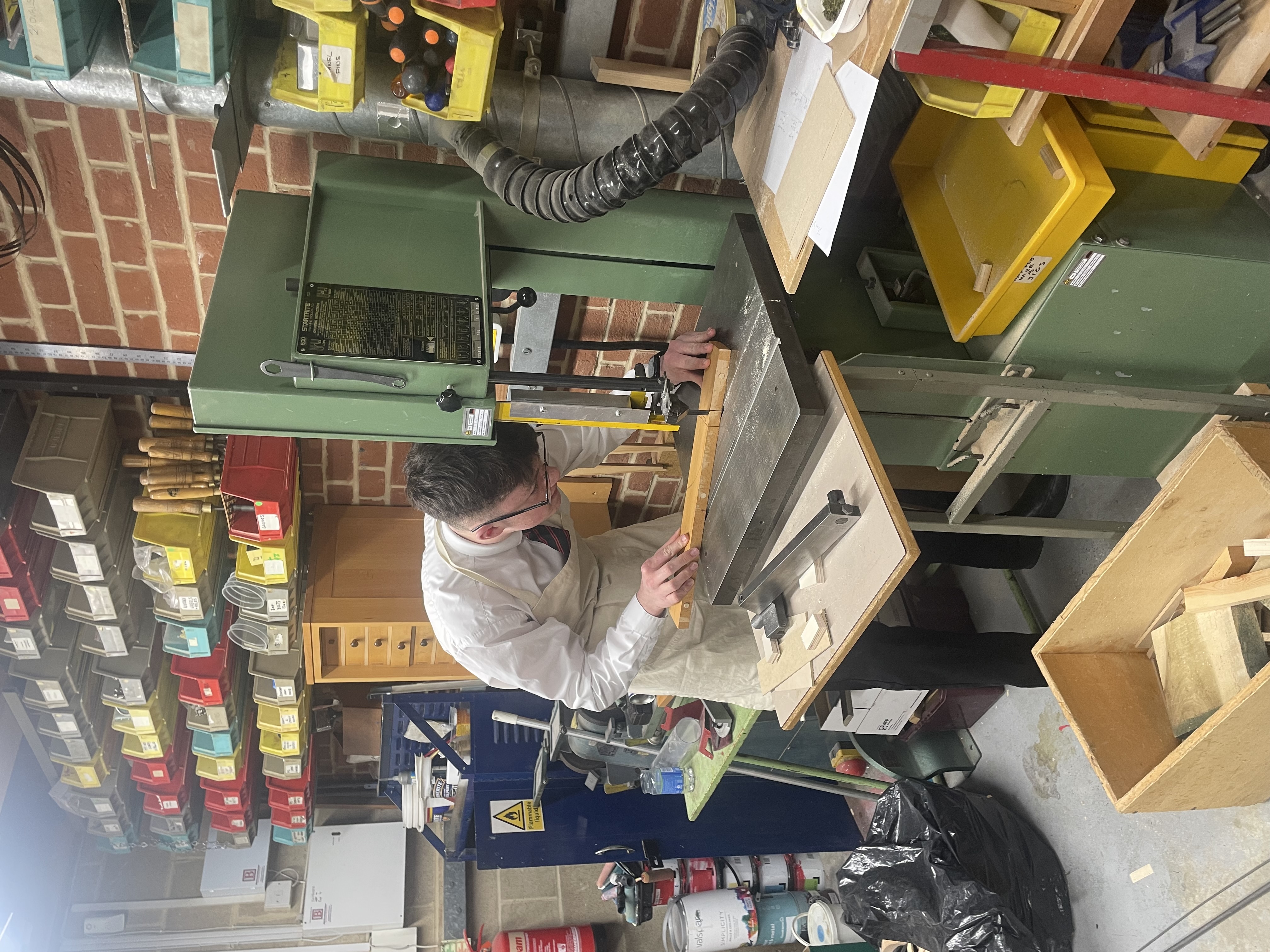
All wooden components were cut from solid beech reclaimed from retired staffroom chairs — repurposed rather than purchased, keeping material waste out of landfill. The body, head, and tail profiles were cut using the bandsaw, working to templates derived from the technical drawings. The curved organic shapes required careful feed control to maintain accuracy on the blade — any deviation in the body profile would affect how the interchangeable parts aligned.
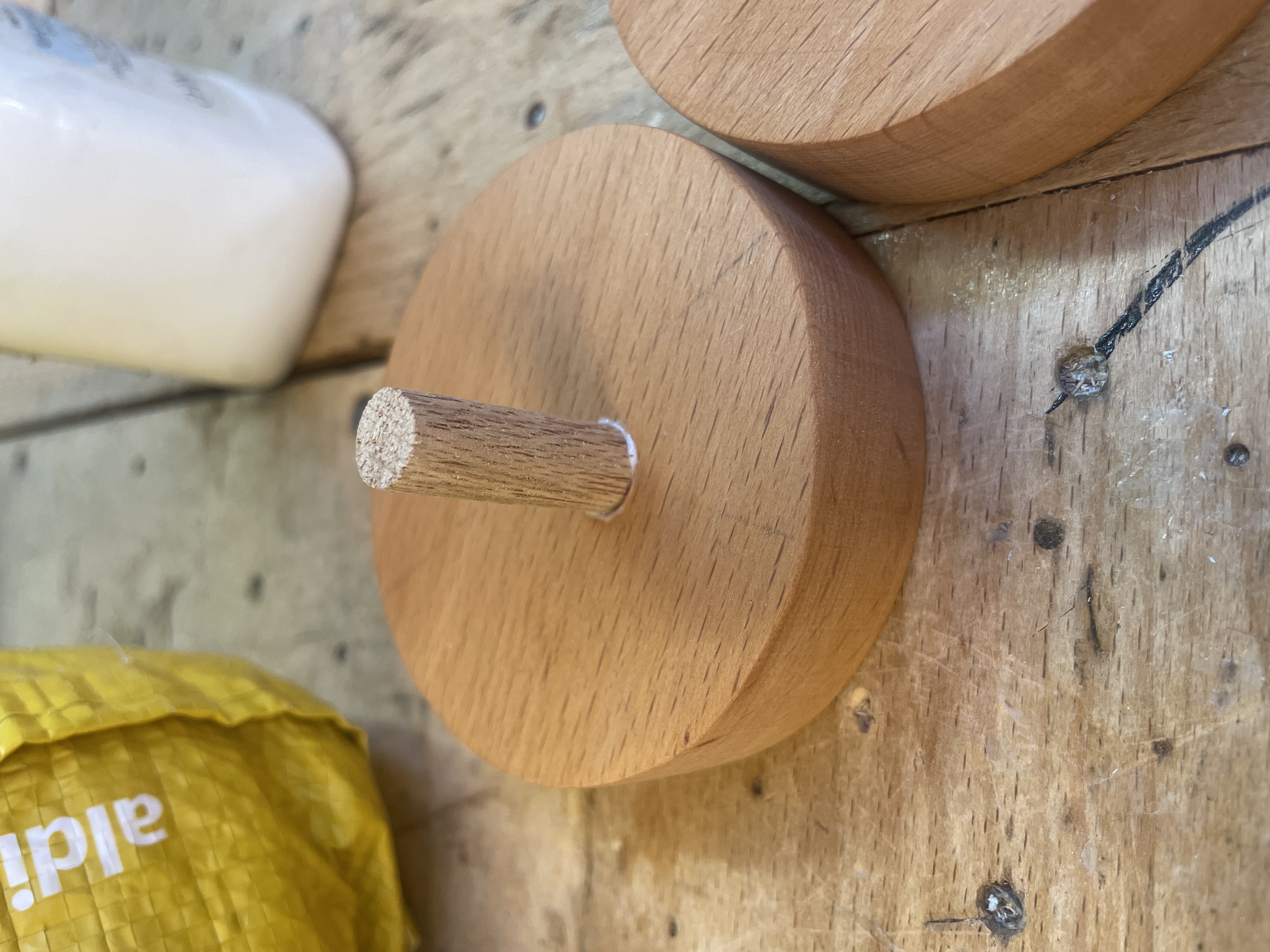
The wheels were pre-turned beech discs, fitted to dowel axles glued into the body. Axle placement was drilled precisely to ensure the toy sat level and rolled straight — a small tolerance error here would be immediately visible in the finished piece.
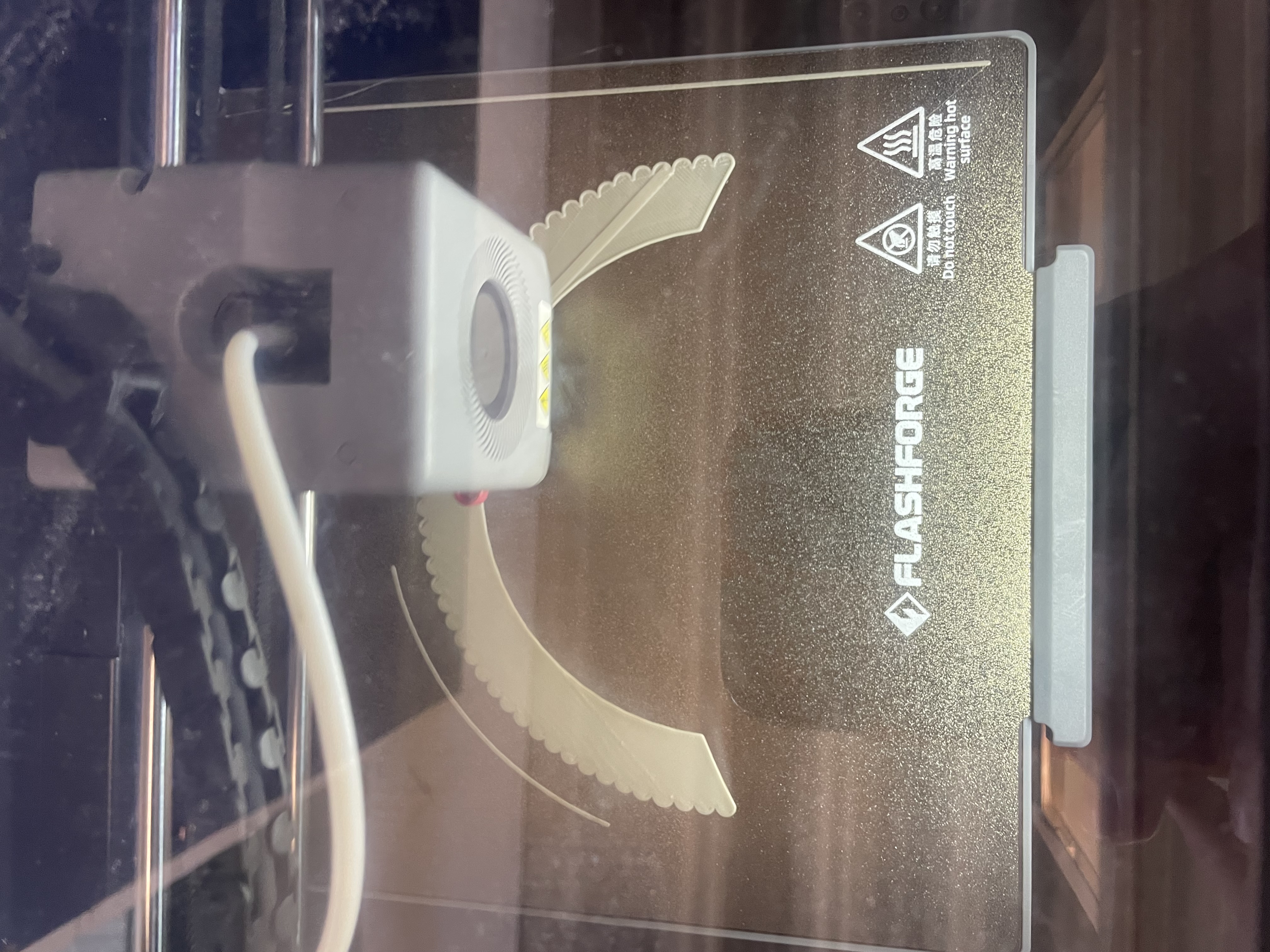
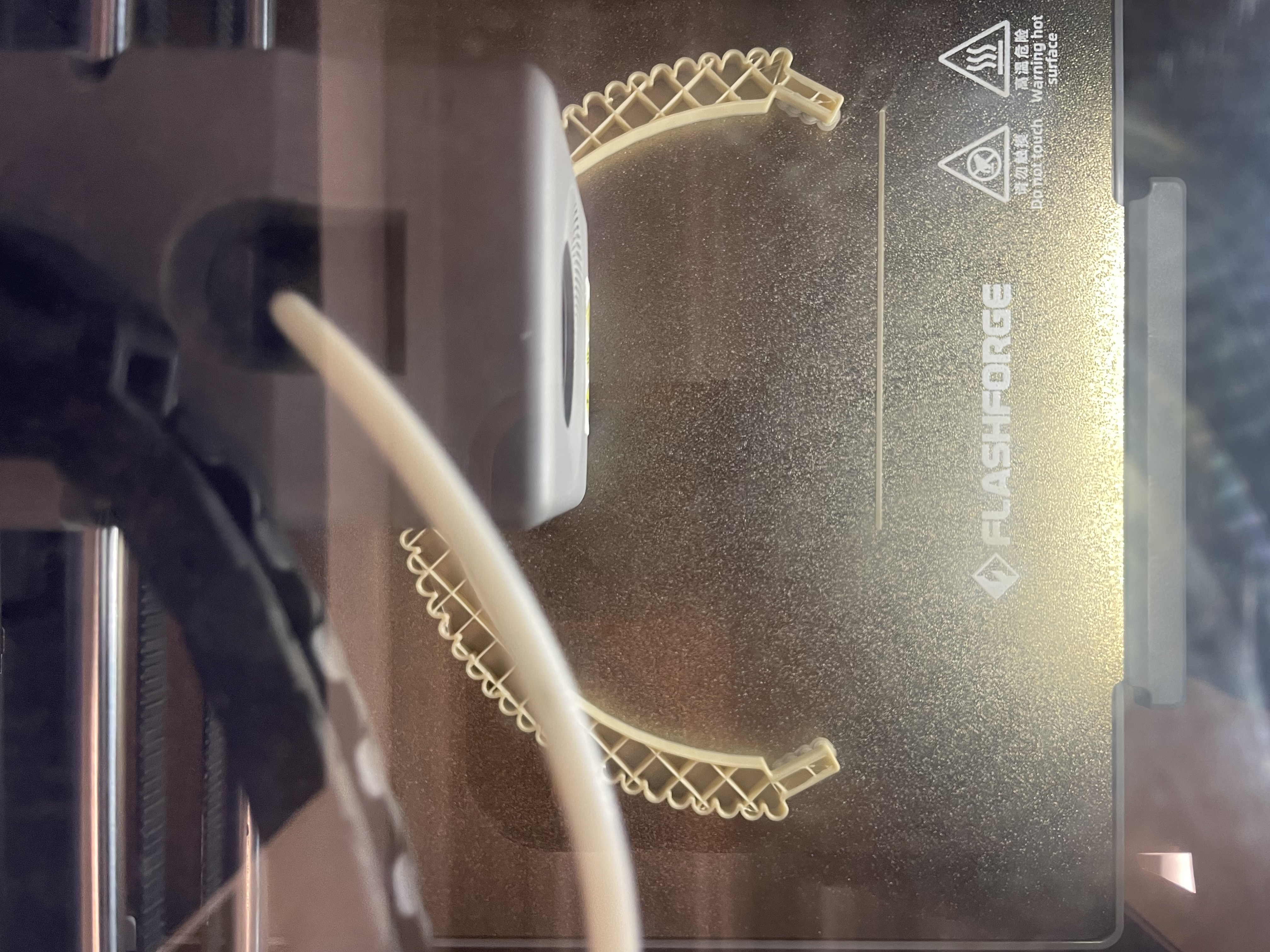
The handle was printed on a Flashforge FDM printer from the CAD model. The scalloped profile required careful orientation on the build plate to avoid support material interfering with the detailed outer edge — the handle was printed arch-side down so the ridges printed cleanly without drooping.
Using 3D printing for the handle rather than attempting to cut it from wood was a deliberate manufacturing decision: the compound curve and fine ridge detail would have been extremely difficult to achieve consistently in beech, whereas printing allowed the design intent to be realised exactly.
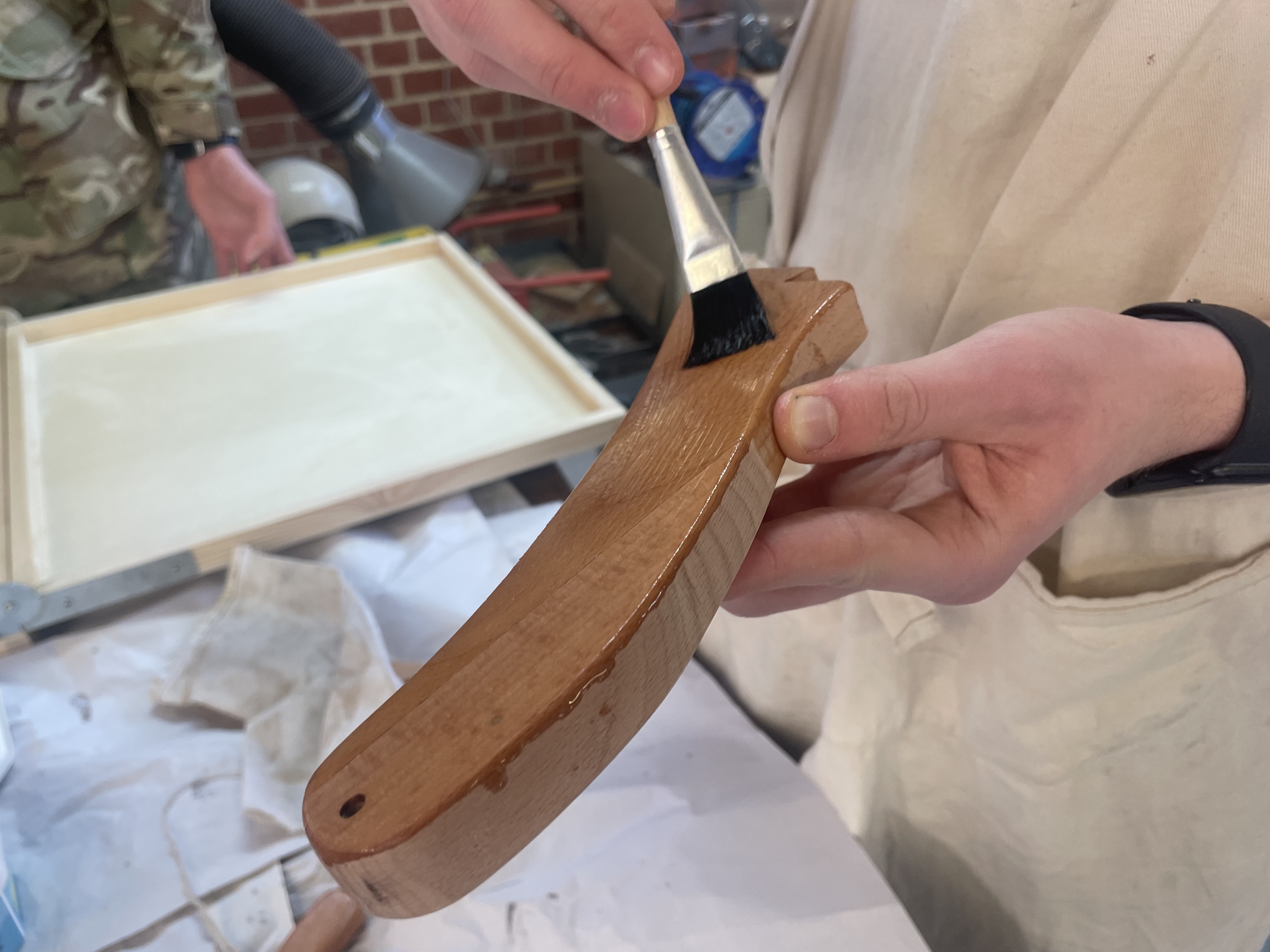
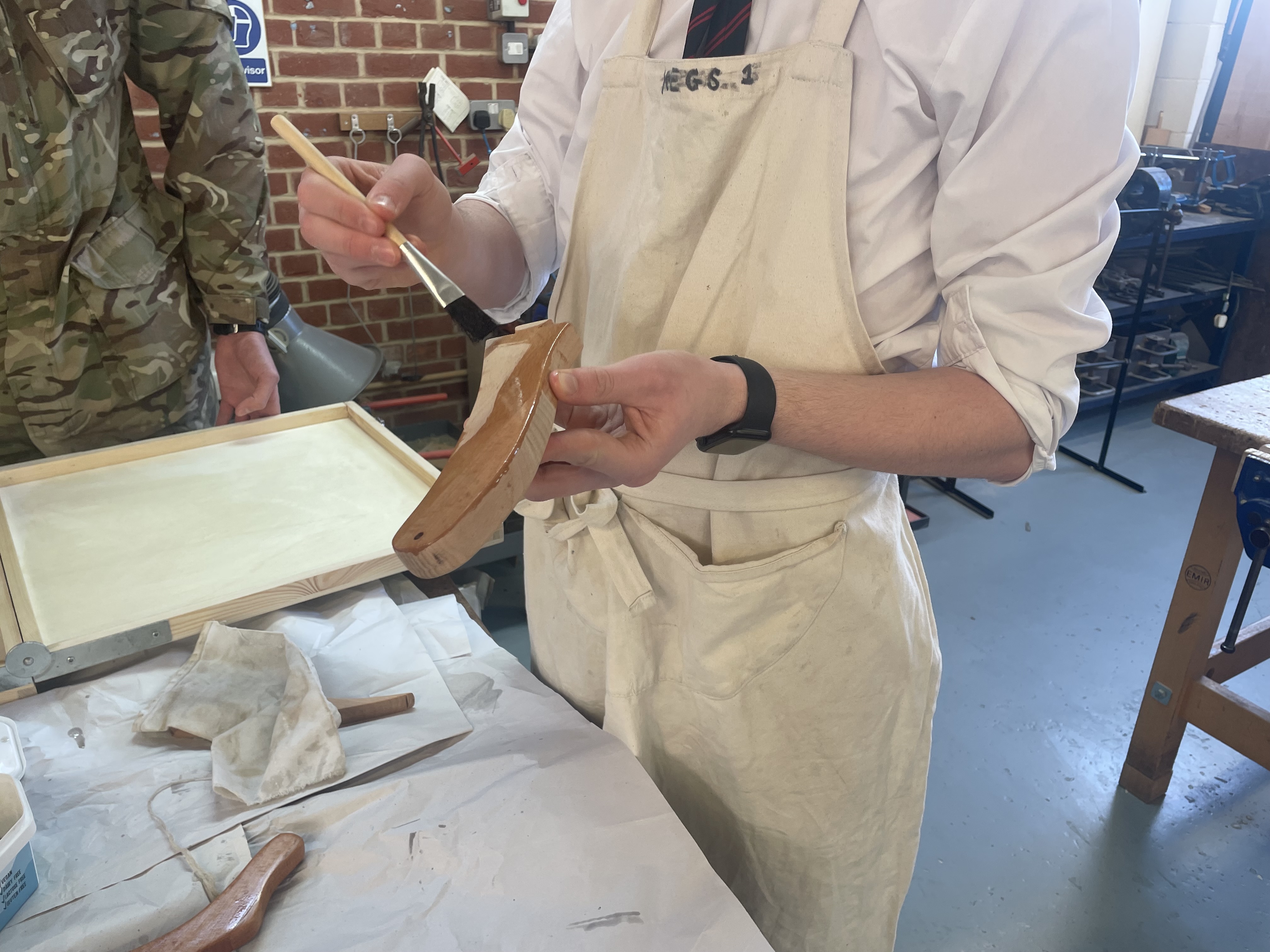
All wooden components were finished with Danish Oil — a penetrating finish that enhances the natural grain of the beech without building a thick surface layer that could crack or peel. Multiple coats were applied with light sanding between each, bringing out the warm tone of the wood and providing a food-safe, child-appropriate surface.
Danish oil was chosen over varnish or paint deliberately — it keeps the material honest, lets the quality of the beech speak for itself, and produces a tactile warmth that painted finishes cannot match.
With all components finished, the toy was assembled and photographed for submission. The two head configurations demonstrate the modular concept — a long-necked sauropod using the elongated head, and a Spinosaurus configuration using the shorter head alongside the spine-ridged handle. The interchangeable system works without tools: parts slot cleanly and hold firm enough for play without being difficult for a child to swap.
The NEA folder documenting the full design process — approximately 10,000 words across 60+ slides — was submitted alongside the physical piece. The manufacture component was awarded 20 out of 20 by the external examiner, and the folder 78 out of 80, giving a total of 98 out of 100 and a final GCSE grade of 9.